The stage is bare, and then the bamboo begins to move — poles lashed into arched bridges, sampan boats, the sloping rooftops of a Red River delta village. Acrobats climb and swing, the đàn bầu sings its single string, and a northern Vietnamese village wakes for an hour: the rice harvest, a house-raising, a festival at the communal đình. Here's what the Làng Tôi bamboo cirque actually puts before you, and how it fits an evening in Hanoi.
What it isA Lune Production 'bamboo cirque' that recreates a northern Vietnamese village through bamboo acrobatics, aerial pole, contortion and live folk music — non-verbal, around 60 minutes, staged in Hanoi
The signatureSome fifteen to eighteen performers turning bundles of bamboo into bridges, boats and rooftops in front of you, to live music played on more than twenty traditional instruments including the đàn bầu monochord and bamboo flute
The catchFrom 3 November 2026 the show plays at the Hanoi Lune Center for the Bamboo Circus, 42 Tràng Tiền, steps from Hoàn Kiếm Lake — for any date before then, go to the venue shown on your booking
Where it isIn central Hanoi, an easy evening's walk from Hoàn Kiếm Lake and the Old Quarter — a show that pairs naturally with a night in the city's historic heart
Your seat, reservedAn evening of the My Village bamboo cirque, held for your date
Free cancellation24 hours' notice gets every đồng back
Secure checkoutBooked through GetYourGuide's protected payment
Book in your languageFollow the whole booking, from seat pick to confirmation, in your language
A village built from bamboo
A village built from bamboo
The idea: bamboo becomes a village
The show takes the most ordinary material in Vietnam, bamboo, and makes it do everything — its name, Làng Tôi, simply means 'my village'. Over about an hour, performers lash and raise the poles into the shapes of a Red River delta village: arched footbridges, sampan boats poled across an imagined river, the sloping rooftops and frames of village houses. Nothing is hidden; the building is the show. What could be a set becomes choreography, and a bare stage becomes a place with paddies, water and a horizon. It is circus, dance and stagecraft folded into one, and its subject is not a spectacle at all but everyday northern village life.
Not the highlands — the delta
This is a specifically northern, lowland Vietnam: the flat green Red River delta, not the misty central highlands of its sibling shows. The world it raises is communal and agricultural — rice farming, a house-raising where the whole village lends hands, courtship games at a festival, rituals centred on the đình, the communal house that anchors every northern village. The mood is cool and green rather than firelit: bamboo, river, rice-paper light. If you have seen photographs of Lune's ember-lit highland show, Làng Tôi is its calmer, greener, more pastoral cousin — nostalgia for a delta childhood rather than tribal ritual.
Live music at its heart
The soundtrack is played live, in the room, on more than twenty traditional Vietnamese instruments. The đàn bầu — the one-stringed monochord whose bending notes sound almost like a human voice — and the bamboo flute carry much of the feeling, over drums, bamboo percussion and folk song. Because Làng Tôi is non-verbal, the music does the storytelling the words would: it sets the harvest, the festival and the quiet evening on the river. You do not need a syllable of Vietnamese to follow it, which is part of why the show has toured Europe as readily as it plays at home in Hanoi.
Trần Mai Anh — I cover how Hanoi spends its evenings, this show included — what Làng Tôi puts on stage, where it sits among Lune Production's other work, and how to slot it into a night that also takes in Hoàn Kiếm Lake and the Old Quarter.
The evening, scene by scene
The evening, scene by scene
Làng Tôi builds a village and then lives a day in it. The exact running order varies, but these are the moments you can expect across the hour.
I
The village wakes
The opening: a bare stage, and then bamboo rising into the first bridges and rooftops as the đàn bầu and flute set a dawn over the delta. The paddies, the river and the everyday rhythm of the village take shape from nothing — the show's quiet, establishing overture before the acrobatics build.
II
The house-raising
Bamboo as construction and choreography at once: poles swung, passed and locked into the frame of a house, the whole company working together the way a delta village raises a home by collective hand. It is the clearest expression of the show's idea — building as dance, labour turned into a set-piece of balance and timing.
III
Courtship and festival games
The village at play: the flirtation, teasing and games of a northern festival, lighter and brighter than the working scenes. Bamboo becomes swings and poles for the young to show off on, the music turns to folk song, and the communal life around the đình comes to the fore — the warm, human centre of the evening.
IV
A music interlude
A moment for the sound itself: the live ensemble stepping forward, the đàn bầu's bending single string and the bamboo flute carrying a passage with little or no movement behind them. In a non-verbal show the music is the narration, and this is where it is most exposed — the quiet, held heart of the hour.
V
The finale
The close: the full company and the full apparatus of bamboo brought together, aerial pole and massed movement over the raised village, the music building to a last swell. It is the show's most spectacular moment — the village complete and alive — before the bow and the walk out into the Hanoi night.
The Lune show family
The Lune Production show family
Show
City
World it stages
Where
Làng Tôi (My Village)
Hanoi
Northern Red River delta village life
Hanoi Lune Center for the Bamboo Circus, 42 Tràng Tiền (from 3 Nov 2026)
À Ố Show
Ho Chi Minh City
Rural-to-urban Vietnam, village meets city
Saigon Opera House
Teh Dar
Hoi An
Central Highlands tribal life, firelit and ritual
Hoi An Lune Center
The Mist (Sương Sớm)
Ho Chi Minh City
Rice farming through the seasons
Saigon Opera House
What to know before you book
Làng Tôi is a straightforward evening, but a few things are worth knowing before you choose your date and seat.
~60the length of the show in minutes — one continuous, non-verbal performance, no interval
It's non-verbal — no Vietnamese needed
Bamboo, movement and a live score carry the whole story here — there's no dialogue to translate, so it reaches an audience of any background just as it reaches a local one. That's part of why Làng Tôi has toured well beyond Vietnam. Watch for the imagery and listen to the music; you won't need a translation to follow either.
Check the venue and time on your listing
From 3 November 2026 Làng Tôi plays at the Hanoi Lune Center for the Bamboo Circus, 42 Tràng Tiền, Lune Production's new Hanoi home for the show, steps from Hoàn Kiếm Lake. For any date before then, the venue shown on your booking is the one to go to. Performances are typically in the early evening, but schedules can change, so confirm the exact venue and start time on your specific booking rather than assuming a fixed nightly slot.
The theatre is intimate
This is chamber-scale theatre, not an arena show — a company of around fifteen to eighteen performers in a modestly sized house. That makes for a close, detailed experience where you can see the bamboo being lashed and the musicians playing, but it also means seats are limited and sell through faster than a big-venue show. Booking ahead is worth it, particularly in peak travel months.
It suits most ages
With no dialogue, plenty of movement and a running time of about an hour, the show works well for families and mixed groups, and the imagery — village life, water, festival — is gentle rather than intense. It is a good option for an evening that a range of ages can share. Check the listing for any age guidance if you are travelling with very young children.
What kind of show is this?
What kind of show is this?
Two things catch people out about Làng Tôi, and both are worth settling before you book.
Cirque, not variety
A bamboo cirque, not a water puppet show
Làng Tôi is easy to confuse with Hanoi's famous water puppet theatre, but it is something else entirely: a modern 'bamboo cirque' from Lune Production — acrobatics, aerial bamboo pole, contortion and live folk music, staging a whole northern village rather than folk tales on water. It's contemporary circus rooted in traditional material and imagery, non-verbal and around an hour long. If you want the water puppets, that's a different show; if you want bamboo raised into a living village, this is the one.
Delta, not highlands
Northern village life, cool and green
Within the Lune family, Làng Tôi is the specifically northern, lowland one — the flat green Red River delta, the communal đình, rice and river — cool and pastoral in mood. That sets it apart from the ember-lit central-highlands tribal world of its sibling Teh Dar. If you're choosing between the Lune shows, or have seen one already, know that Làng Tôi's world is the delta village: bridges, boats, rooftops and harvest, not highland ritual.
The order of the evening
A Làng Tôi evening is compact and self-contained — one continuous, non-verbal performance of about an hour, book-ended by a walk through central Hanoi. Here's how the night falls.
01
Arrive at the theatre
From 3 November 2026 Làng Tôi is staged at the Hanoi Lune Center for the Bamboo Circus, 42 Tràng Tiền, in the French Quarter just steps from Hoàn Kiếm Lake; for any earlier date, the venue on your booking is the one to go to. Aim to arrive a little before the start — typically early evening, though you should confirm the time on your booking — so you can find the venue and settle without rushing.
02
The village wakes
The show opens on a bare stage and builds its world from nothing: bamboo raised into the first bridges and rooftops, the đàn bầu and flute setting a dawn over the paddies. The early scenes establish the village and its rhythm — water, rice, the everyday movement of a delta community — before the acrobatics and the set-pieces build. There is no interval; the hour runs as one continuous piece.
03
Work, courtship and festival
The heart of the show is village life in motion: a house-raising with poles swung and locked into a frame, harvest and river work, the flirtation and games of a festival, aerial bamboo-pole acrobatics and contortion woven through it all. The live musicians shift with each scene, the đình recurring as the village's communal anchor. This is where the circus skill and the folk imagery meet — construction as dance, labour as spectacle.
04
Out into Hanoi's heart
The show runs about an hour and lets out into central Hanoi in the early evening, with the night still ahead of you. The theatre sits within an easy walk of Hoàn Kiếm Lake and the Old Quarter's thirty-six streets, at their liveliest after dark. Many people fold the show into a wider Hanoi evening — a walk around the lake, dinner and a beer in the Old Quarter — rather than treating it as the whole night.
The world of the show, in pictures
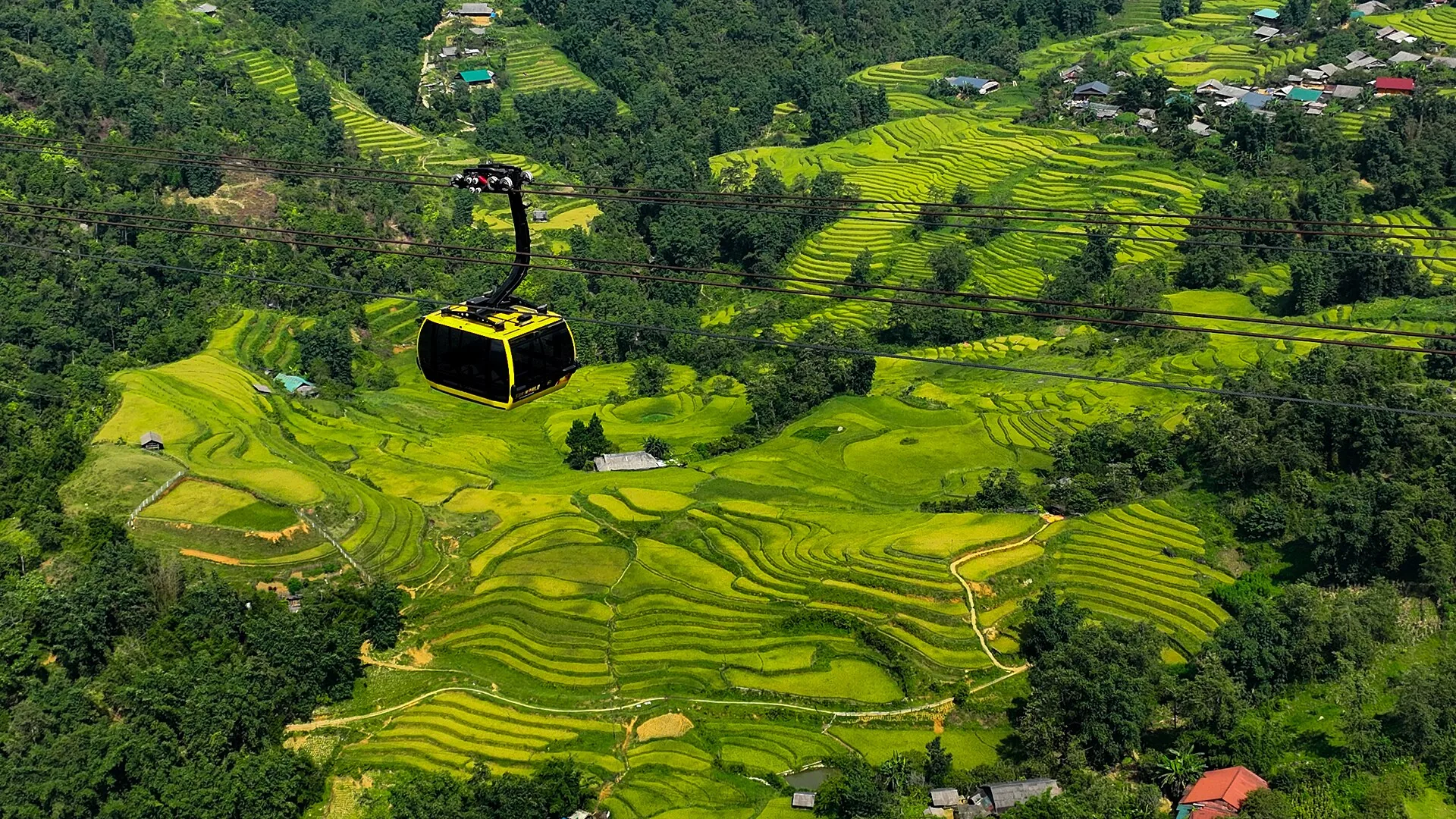
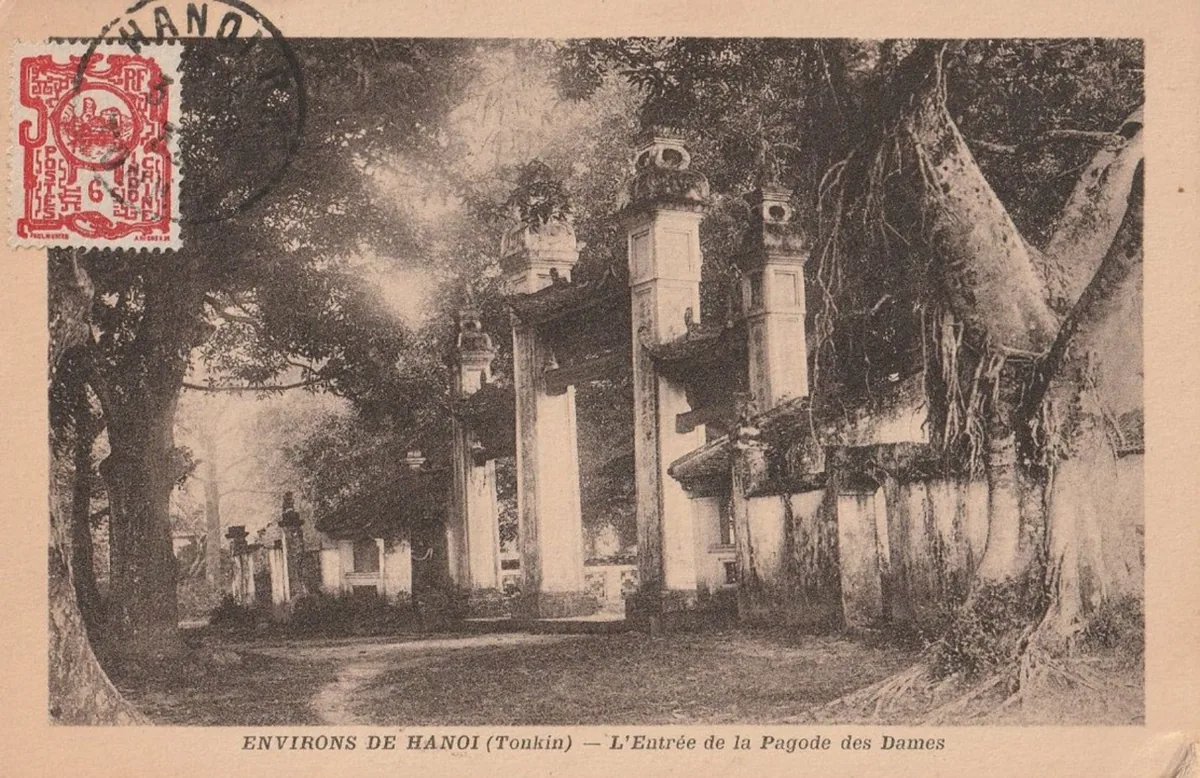
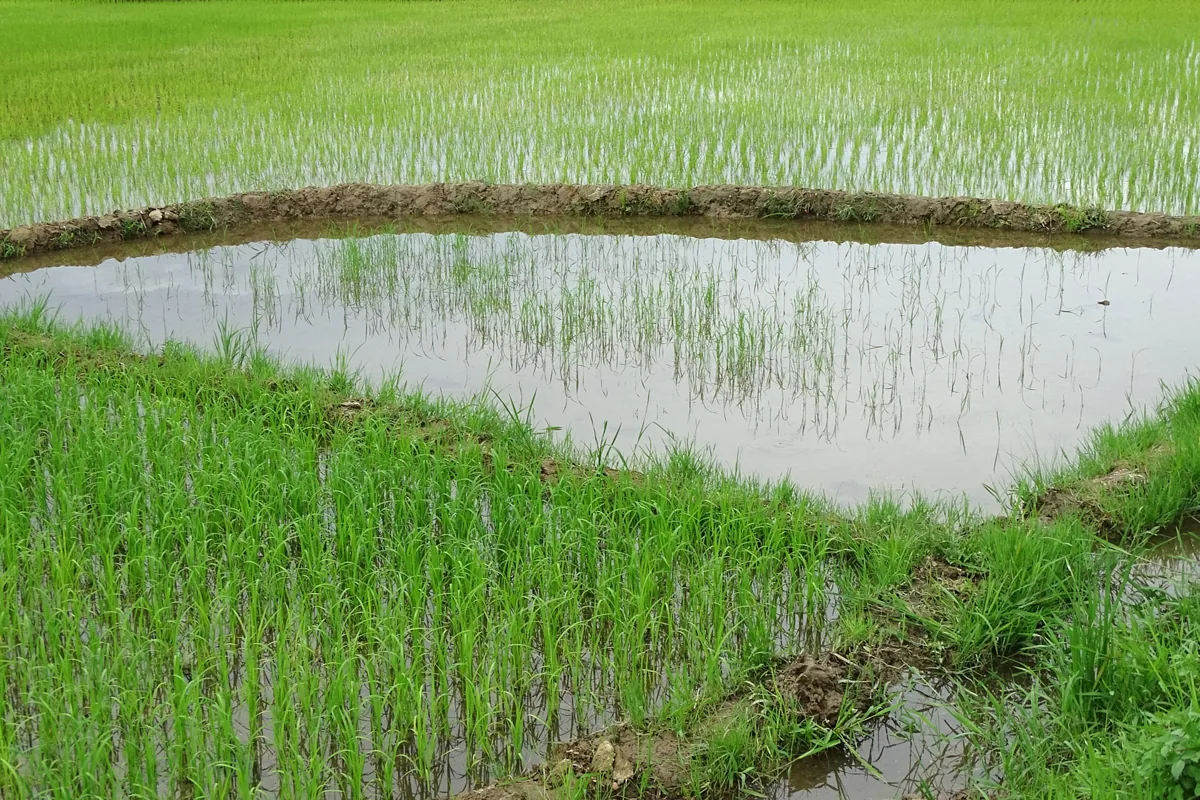
The communal đình, the delta paddies, the đàn bầu, and the Hanoi Old Quarter the theatre sits within.
Photograph by Indochine Films et CinémasPhotograph by Adam JonesPhotograph by Presidio of MontereyPhotograph by Alexkom000
When to go
The show runs indoors year-round, so the season affects the booking and the Hanoi evening around it more than the performance itself.
Autumn (Sep–Nov)
Hanoi's finest season and its busiest for visitors: cool, dry, golden evenings, the Old Quarter and Hoàn Kiếm Lake at their most pleasant to walk before or after the show. It's the loveliest time to fold Làng Tôi into a wider evening in the city — but also when seats and the whole centre are in most demand, so book ahead.
Spring (Feb–Apr)
Mild and increasingly humid, with drizzle common early on, spring is another popular window either side of the Lunar New Year. Around Tết itself the city can be quieter in some ways and packed in others, and performance schedules may shift for the holiday — so check that the show is running on your date and book early if your trip lands near the festival.
Summer (May–Aug)
Hot, humid and prone to afternoon downpours by day, but the air-conditioned theatre makes a fine indoor evening plan and the after-show Old Quarter is at its liveliest. It's a good season to make the show the cool, calm centre of the night, then step out for street food and a beer once the heat has eased.
Winter (Dec–Jan)
Hanoi winters are cool and can be grey and damp, which makes an indoor show an easy call and the centre a little quieter. A warm theatre and a delta village on stage suit a cool northern night; dress for a chilly walk to and from the venue and enjoy the thinner crowds around the lake and the Old Quarter.
My Village show tickets in Hanoi
Find a Làng Tôi show evening for your dates
Follow any of these through to GetYourGuide to finish up — the seat map, your chosen date and the total in your own currency all show before you're charged anything. Pick a plain evening at the bamboo cirque, or one paired with a transfer or more time in central Hanoi.
The dates below pull straight from GetYourGuide's own calendar for the Làng Tôi bamboo cirque, priced in your currency.
Before anything else, check your listing for the exact venue and start time. From 3 November 2026 the show plays at the Hanoi Lune Center for the Bamboo Circus, 42 Tràng Tiền, steps from Hoàn Kiếm Lake, typically in the early evening; for any earlier date, go to the venue shown on your booking. Schedules can change, so let your specific booking — not a guidebook or an old blog — tell you where and when to be.
Build the night around Hoàn Kiếm Lake
The theatre sits in central Hanoi within an easy walk of Hoàn Kiếm Lake and the Old Quarter, so the show works best as part of a wider evening rather than a standalone trip. Arrive early to stroll the lake and its Ngọc Sơn temple, or linger afterwards for the Old Quarter's night market and street food. Give yourself time either side and the show becomes the centrepiece of a whole Hanoi night.
Getting to the theatre
Central Hanoi is walkable, and the venue is a short taxi, Grab or cyclo ride from most Old Quarter and lakeside hotels. Traffic thickens in the early evening, so leave a little margin and aim to arrive before the start. Have the theatre's name and address saved on your phone for the driver, and confirm any pickup only if your specific booking includes a transfer option.
Eat around the show, not during it
The show is about an hour with no interval and no dining, so plan food around it. An early bún chả or phở before the performance, or a late Old Quarter dinner and a bia hơi afterwards, both work well. The centre is dense with street food within walking distance of the theatre, so you don't need to build the meal into the ticket — just leave time on one side or the other.
Book ahead for a small house
Because this is intimate, chamber-scale theatre with a limited number of seats, popular dates sell through faster than a big-venue show — especially in autumn and spring and around Vietnamese holidays. Booking online holds your seat and shows the price in your own currency, and free cancellation lets you lock a date early while the rest of your Hanoi plans firm up.
It's a 'bamboo cirque' from Lune Production — the company behind À Ố Show, Teh Dar and The Mist — that recreates a northern Vietnamese village on stage using bamboo acrobatics, aerial pole, contortion and live folk music. Over about an hour, performers lash bamboo into bridges, boats and rooftops to raise a whole Red River delta village, staging rice farming, a house-raising, courtship games and festival life. It's non-verbal contemporary circus rooted in traditional Vietnamese material, not a folk-tale or water puppet show.
Where is it performed?
From 3 November 2026 Làng Tôi plays at the Hanoi Lune Center for the Bamboo Circus, 42 Tràng Tiền, Lune Production's new Hanoi home for the show, in the French Quarter just steps from Hoàn Kiếm Lake. For any date before then, the venue shown on your booking is the one to go to, so check the exact venue and start time on your specific listing. Either way it's central Hanoi, within an easy walk of Hoàn Kiếm Lake and the Old Quarter.
Do I need Vietnamese to follow the story, and how long does it run?
No Vietnamese is needed — the whole hour is told without a single spoken word, through bamboo staging, movement and the live band. It plays straight through, about 60 minutes with no break, and that's exactly why it tours abroad so easily. Sit back for the pictures and the music; the story reaches you either way.
How is it different from Teh Dar and the other Lune shows?
All are Lune Production 'cirque' shows, but each stages a different Vietnam. Làng Tôi is the northern one: the flat green Red River delta, communal village life, the đình, rice and river, cool and pastoral in mood. Teh Dar stages the central highlands — tribal ritual, firelit and intense — while À Ố Show contrasts village and city and The Mist follows rice farming through the seasons. If you've seen one already, Làng Tôi's distinct world is the northern delta village.
What instruments and music does it use?
The soundtrack is played live on more than twenty traditional Vietnamese instruments. The đàn bầu — the one-stringed monochord whose bending notes sound almost vocal — and the bamboo flute carry much of the emotion, over drums, bamboo percussion and folk song. Because the show has no dialogue, the music does the storytelling, shifting with each scene from the dawn harvest to the festival. It's a large part of what gives the evening its feeling.
Is it suitable for children and families?
Yes. Nothing is spoken, the pace keeps moving, live musicians play throughout and the whole thing wraps in roughly an hour, which suits families and mixed-age groups well. The scenes — village life, water, a festival — stay gentle rather than intense. For a toddler or infant, glance at the listing for any age guidance and lean toward the earlier evening slot.
Bamboo bends into bridges, sampans and rooftops, and a whole Red River delta village rises on the stage — the paddies, the courtship games, the đình at the heart of it. Here's what the show puts before you and how it fits a night in Hanoi.